This is an independent guide written by a local real estate agent. It is not affiliated with the City of Vernon, Interior Health, BC Housing or any other agency named here. Each answer is built from official and primary sources, which are listed at the bottom of the page. It covers where Vernon is, how big it is, what everyday life costs and the downsides people should hear about, along with things to do through the year. Some figures are a few years old, and the answers say so where it matters.
 Sean's insider tip
Visit once in winter and once in summer before you decide. The two seasons feel very different, and a short stay in each tells you more than any article can. Drive the commute you would actually make, and ask yourself what a normal Tuesday would look like.
Where is Vernon and how big is it?
Is Vernon considered part of the Okanagan?
Yes, Vernon is in the Okanagan: it sits at the northern end of the Okanagan Valley, in the area known as the North Okanagan.
The City is one of six municipalities in the Regional District of North Okanagan, along with Armstrong, Coldstream, Enderby, Lumby and Spallumcheen. The valley as a whole is covered by three Okanagan regional districts. The City describes Vernon as surrounded by three lakes, and its beach directory lists spots on Kalamalka Lake and Okanagan Lake.
"Greater Vernon" is a local term for the urban area, whose communities share services such as Greater Vernon Water.
What lake is Vernon, BC on?
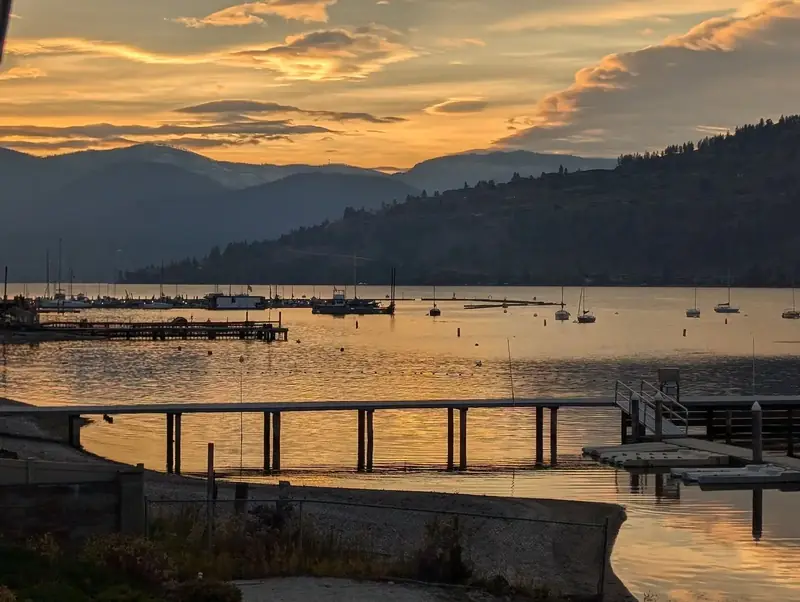
Vernon sits between the northern tip of Okanagan Lake and Kalamalka Lake, with Swan Lake at the north end of the city. The City of Vernon describes Vernon as surrounded by three lakes, and its recreation pages feature Okanagan, Kalamalka and Swan lakes.
Kin Beach, on Okanagan Lake, and Kal Beach, on Kalamalka Lake, are the two largest public beaches. Swan Lake has no public beach, but the City calls it a popular fishing spot, especially for ice fishing. So there is no single Vernon lake: which one you head to depends on whether you want to swim, paddle or fish.
How big is Vernon, B.C.?
The City of Vernon covers about 96 square kilometres and had 44,519 residents at the 2021 census.
Statistics Canada puts that at roughly 462 people per square kilometre. BC Stats estimates the city at 49,527 people in mid-2025. The wider Vernon census agglomeration, which includes neighbouring communities, counted 67,086 in 2021, and the City says Vernon serves a regional population of more than 100,000. Next door, the District of Coldstream covers about 67 square kilometres and had 11,171 residents.
Is Vernon bigger than Kamloops?
No, Kamloops is a little more than twice the size of Vernon. BC Stats' July 1, 2025 estimates put the City of Kamloops at 108,793 people and the City of Vernon at 49,527.
The gap is similar across the wider urban areas: BC Stats estimates the Kamloops census metropolitan area at 127,198 and the Vernon census agglomeration at 73,500.
These are annual estimates that BC Stats revises, so they differ from census counts. The 2021 Census counted 44,519 people in the City of Vernon and 67,086 in the Vernon agglomeration.
Is Penticton bigger than Vernon?
No, Vernon is bigger than Penticton. BC Stats' July 1, 2025 estimates put the City of Vernon at 49,527 people and the City of Penticton at 39,068.
The wider areas show the same gap: the Vernon census agglomeration was estimated at 73,500 and the Penticton agglomeration at 49,807. At the 2021 Census, the two agglomerations counted 67,086 and 47,380.
Statistics Canada counts and BC Stats estimates use different methods, so compare numbers within the same series. In the city proper, Vernon leads by roughly ten thousand people.
Is Kelowna near Vernon?
Yes, Kelowna is the closest big city to Vernon, and the drive south takes under an hour. Tourism Kelowna lists the trip from Vernon as under an hour via Highway 97. Kelowna had an estimated 167,654 residents in 2025 (BC Stats), against 49,527 in Vernon.
The City of Vernon says Kelowna International Airport is about 25 minutes from downtown Vernon, which is why many residents fly out of Kelowna. BC Transit's Route 90 also connects the Vernon system with Lake Country, UBC Okanagan and the airport. Winter weather can slow the drive, so check DriveBC first.
Population and growth
Is Vernon growing?
Yes, Vernon has been growing steadily: the City's population rose 11% between the 2016 and 2021 censuses, from 40,116 to 44,519.
The wider Vernon census agglomeration grew 9.4% over the same period, from 61,324 to 67,086. BC Stats' estimates for July 1, 2025 put the city at 49,527, up 1.2% on 2024, and the agglomeration at 73,500, up 0.5%, so growth has slowed recently.
Estimates and census counts use different methods, so avoid comparing them directly.
What are the seasons like?
What is it like living in Vernon in winter and summer?
Vernon has four real seasons: cold, snowy winters and hot, dry summers. Environment and Climate Change Canada's 1991 to 2020 normals show January highs averaging -0.5°C with lows near -6.4°C, and about 93 cm of snow a year. In July, highs average 28.4°C with lows near 12.7°C, and annual precipitation is only about 447 mm.
The record high in that 30-year period was 39.5°C. For snow, heat and wildfire detail, see the Vernon weather guide.
What does life cost here?
Is it expensive to live in Okanagan?
It can be, especially for housing, but costs vary a lot between Okanagan towns and are generally lower than in Metro Vancouver. BC Assessment's 2026 typical single-family values were $918,000 in Kelowna, $721,000 in Vernon and $700,000 in Penticton (values as of July 1, 2025).
The 2025 living wage, the hourly pay a full-time worker needs to cover basic costs, was $25.95 in Kelowna, $25.10 in Penticton and $24.10 in Vernon, against $27.85 in Metro Vancouver. Vernon's median household income was $73,500 in 2020, below the B.C. median of $85,000, which is worth weighing against local home prices.
What is the average household income in Vernon, BC?
The median household income in Vernon was $73,500 in 2020, below the B.C. median of $85,000. Both are before-tax total household incomes from the 2021 Census, and the City of Vernon's Official Community Plan quotes the same figures. A median means half of households earned more and half earned less, so it usually gives a fairer picture than an average.
The figures reflect 2020, a pandemic year, and incomes have likely changed since. Newer figures will come from the 2026 Census. For a cost-based benchmark, the 2025 living wage for Vernon is $24.10 an hour.
What is the median household income in British Columbia?
British Columbia's median household income was $85,000 in 2020, according to the 2021 Census. That is before-tax total income across all households. The City of Vernon's Official Community Plan quotes the same figure and compares it with Vernon's median of $73,500.
A median is the middle point: half of B.C. households earned more and half earned less. It reflects 2020, a pandemic year, so incomes today will differ. For a cost-based comparison, the 2025 living wage is $24.10 an hour in Vernon and $27.85 in Metro Vancouver.
What is the most affordable place to live in the Okanagan?
In BC Assessment's 2026 figures, Enderby ($529,000) and Lumby ($577,000) had the lowest typical single-family values among the main Okanagan Valley communities, and Lake Country ($933,000) and Kelowna ($918,000) the highest.
The same table lists Oliver and Spallumcheen at $611,000, Armstrong $628,000, Osoyoos $639,000, Penticton $700,000, Vernon $721,000, Summerland $752,000 and Coldstream $910,000. These are median assessed values as of July 1, 2025, not sale prices. Salmon Arm, in the Shuswap, is $658,000.
For recent sales, the Association of Interior REALTORS' September 2026 single-family benchmark prices were $793,000 in the North Okanagan and $718,400 in the South Okanagan. Affordability also depends on wages and rent.
What are the downsides?
Every town has trade-offs. These are the ones people ask about most.
What are the downsides of living in Vernon?
Every town has trade-offs, and in Vernon the ones people raise most are home prices compared with local incomes, the need for a car, summer wildfire smoke and winter.
- Housing: the North Okanagan single-family benchmark price was $793,000 in September 2026, while Vernon's median household income was $73,500 (2021 Census, for 2020).
- Getting around: about 88% of commuters went by car, truck or van in 2021, and 1.4% took transit.
- Air: the City's wildfire plan notes that smoke is becoming more common in the Okanagan during fire season.
- Rent: a one-bedroom apartment averaged $1,244 in October 2025.
- Winter: January highs average -0.5°C, with about 93 cm of snow a year.
Does Vernon have a homelessness problem, and where do people get help?
Like many B.C. communities, Vernon has people experiencing homelessness: the provincial count on April 10, 2025 included 199 people, down from 279 in 2023. Of those, 114 were staying in shelters and 85 were unsheltered, and 71% of survey respondents had lived in Vernon for five years or more. A one-day count is a minimum, so the true number is likely higher.
Turning Points runs the free Vernon Emergency Shelter at 2506 37th Street (60 spaces, open 24 hours, for adults 19 and over). Upper Room Mission offers a weekday drop-in and a winter shelter from November 1 to March 31. Supportive housing is growing too, including The Willows, 52 homes that were open by January 2026.
Is Vernon, B.C. a good place to live?
For many people, yes: Vernon offers lakes, skiing nearby, a regional hospital and a small-city pace, but it suits people who are comfortable driving everywhere and paying Okanagan home prices.
About 49,500 people lived in the city in 2025 (BC Stats). Vernon Jubilee Hospital has 24-hour emergency care, and July highs average 28.4°C. The trade-offs are real: BC Assessment put a typical single-family home at $721,000 for 2026, about 88% of commuters went by car, truck or van in 2021, and some summers bring wildfire smoke.
If you want a car-free life or big-city transit, look hard before committing.
What is there to do?
What are some fun things to do in Vernon?
Vernon is built around the outdoors, with three lakes, more than 80 parks and playgrounds in the Greater Vernon area, and over 200 km of mountain bike trails in the region. The City names Kin Beach and Kal Beach as its two largest beaches, and Kalamalka Lake Provincial Park, about 8 km south of the city centre, has more than 14 km of trails through grassland.
For indoor outings, the City lists the Vernon Public Art Gallery, Greater Vernon Museum & Archive, O'Keefe Ranch, the Okanagan Science Centre and the Allan Brooks Nature Centre. Check each venue for current hours and seasons.
What day is Vernon farmers market?
The Vernon Farmers' Market runs Mondays and Thursdays, 8 a.m. to 1 p.m., from April to the end of October at Kal Tire Place, 3445 43 Avenue. In summer 2026 it also held a Saturday market from June to September.
Outside the regular season, the market's website lists a Holiday Market on November 22, 10 a.m. to 3 p.m., indoors at the Rec Centre, and a winter indoor market with dates still to be announced. Schedules and locations can change from year to year, so check the market's website before you go.
What are some fun winter activities in Vernon, BC?
Winter in Vernon means skiing at Silver Star Mountain, Nordic trails at Sovereign Lake, and skating and snowshoeing close to town. The City highlights Silver Star and Sovereign Lake Nordic Centre for the snow season and calls Swan Lake a favourite ice-fishing spot.
Closer in, BC Parks says the trails in Kalamalka Lake Provincial Park suit snowshoeing, with ungroomed cross-country skiing into Cosens Bay when snow levels allow. The City's Centennial Outdoor Rink at 3409 35 Avenue offers free skating when weather permits and is expected to reopen in December 2026. The City does not rent skates, so bring your own.
 A question for you
What matters most to you in a new town: lake time, skiing, work, schools or something else? Tell Sean or Sarah and they will point you to the right part of Vernon.
Related guides
- Cost of living in Vernon, compared
- What it's like to live in Vernon
- Vernon neighbourhoods: where to start
- Renting in Vernon, BC: what to know first
- Vernon weather: winter, summer, smoke and fire
Updated October 28, 2026. Published by Sean Phillips, REALTOR®, Coldwell Banker Executives Realty. General information from official sources, not legal, tax, immigration or medical advice.
Get Sean's free Vernon move plan
Tell Sean where you're coming from and when you're thinking of moving. You'll get a short, personal plan: neighbourhoods that fit, what homes in your range look like right now, and a timeline that works with your move.
Thinking about the move?
Start with Sarah, Sean's AI assistant, any time of day for quick answers about neighbourhoods, listings and the area. When you're ready for real advice on where to buy, pricing or timing, book a free 10-minute Zoom chat with Sean.
How it works, in under a minute: Sarah answers your first questions any time, and Sean takes over when you're ready for advice.
Sources for this page
- Regional District of North Okanagan, About the RDNO (accessed 2026-10-27)
- Okanagan Basin Water Board (accessed 2026-10-27)
- City of Vernon, Moving to Vernon (about Vernon) (accessed 2026-10-27)
- City of Vernon, Economic Overview (accessed 2026-10-27)
- City of Vernon, Beaches (accessed 2026-10-27)
- City of Vernon, Recreation & Culture (accessed Oct 28, 2026)
- Statistics Canada, Table 98-10-0002-01, population and dwelling counts (2021 Census) (accessed 2026-10-27)
- BC Stats, Municipal and sub-provincial population estimates (to 2025) (accessed 2026-10-27)
- Statistics Canada, The Daily, Feb 9, 2022, Table 3 (accessed 2026-10-27)
- How to get here by car, Tourism Kelowna (accessed 2026-10-27)
- Vernon Regional Transit Guide, BC Transit (Oct 2026) (accessed 2026-10-27)
- City of Vernon, 2021 census media release (accessed 2026-10-27)
- Environment and Climate Change Canada, Canadian Climate Normals 1991-2020, Vernon (accessed 2026-10-27)
- BC Assessment, Southern Interior 2026 Property Assessments Announced (Jan 2, 2026) (accessed Oct 28, 2026)
- Living Wage Report 2025, BC Policy Solutions and Living Wage for Families BC (accessed Oct 28, 2026)
- Statistics Canada, Table 98-10-0057-01, household income statistics (2021 Census) (accessed Oct 28, 2026)
- City of Vernon, Official Community Plan, Community Context (accessed Oct 28, 2026)
- Living Wage for Families BC, 2025 Living Wage in Vernon (local briefing) (accessed Oct 28, 2026)
- Association of Interior REALTORS, Market Statistics (September 2026, North and South Okanagan, single-family) (accessed Oct 28, 2026)
- Association of Interior REALTORS, Okanagan media release, September 2026 (Oct 5, 2026) (accessed Oct 28, 2026)
- Statistics Canada, Table 98-10-0458-01, main mode of commuting (2021 Census) (accessed Oct 28, 2026)
- City of Vernon, Community Wildfire Resiliency Plan 2024 (accessed Oct 28, 2026)
- CMHC, Rental Market Report data tables 2025, British Columbia (Tables 1.1.1 and 1.1.2, Vernon CA) (accessed Oct 28, 2026)
- Homelessness Services Association of BC, 2025 Homeless Count: Vernon community profile (accessed Oct 28, 2026)
- Turning Points Collaborative Society, Shelter (accessed Oct 28, 2026)
- Upper Room Mission, Our Services (accessed Oct 28, 2026)
- CMHC, Canada supports 52 supportive homes in Vernon (Jan 28, 2026) (accessed Oct 28, 2026)
- BC Parks, Kalamalka Lake Park (accessed Oct 28, 2026)
- Vernon Farmers' Market (home page) (accessed Oct 28, 2026)
- Vernon Farmers' Market, Location & Maps (accessed Oct 28, 2026)
- Centennial Outdoor Rink, City of Vernon (accessed 2026-10-27)
- Drop-In Hockey & Skating, City of Vernon (accessed 2026-10-27)